

The Diamond Tetra (Moenkhausia pittieri) is a popular freshwater fish that brings a touch of sparkle to any aquarium. Known for its shimmering scales and peaceful behaviour, this species is a favorite among fishkeepers. In the article we will cover everything you need to know about Diamond Tetras, including their size and appearance, native region, behavior, diet, and how to care for them in a home aquarium. We’ll also discuss ideal tank conditions, dietary needs, and any potential risks associated with keeping these beautiful fish.

Size and appearance
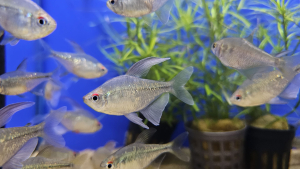
The Diamond Tetra typically grows to a size of about 4-5 cm (1.5-2 inches). They are best known for their iridescent scales that reflect light, creating a diamond-like shimmer. This sparkling effect is most noticeable under proper aquarium lighting, making them a visually captivating addition to any tank. The fish’s body is silver with subtle hues of blue, green, and pink, depending on the angle and lighting. The fins are usually translucent, often with a hint of black edging.
Region
Diamond Tetras are native to Venezuela, specifically found in the Lake Valencia basin and surrounding rivers. The natural habitat of these fish consists of slow-moving, clear waters with plenty of vegetation. This environment provides them with ample cover and a diverse diet, making it essential to replicate similar conditions in a home aquarium.
Behavior
Diamond Tetras are peaceful and sociable fish that thrive in groups. They are schooling fish, meaning they prefer to be in groups of six or more. When kept in schools, they exhibit more vibrant colors and natural behaviors. They are generally non-aggressive, making them compatible with other peaceful species. However, they can become timid if not kept in adequate numbers, so it’s essential to have a proper school size.
Diet
In their natural habitat, Diamond Tetras are omnivores, feeding on a mix of plant material, small insects, and zooplankton. In captivity, they adapt well to a variety of foods. Their diet should include high-quality flake food, as well as live or frozen foods like brine shrimp, daphnia, and bloodworms. A varied diet will help maintain their vibrant colors and overall health. It’s advisable to feed them small amounts multiple times a day rather than a large quantity at once.
How to keep the Diamond Tetra at home
Tank size: Diamond Tetras require a minimum tank size of 70 liters (20 gallons). This allows ample space for swimming and schooling. A larger tank is always better, especially if you plan to keep a sizable group or include other species.
Water conditions: The ideal water temperature for Diamond Tetras is between 24-28°C (75-82°F). They prefer slightly acidic to neutral water, with a pH range of 6.0-7.5. Maintaining stable water conditions is crucial for their health, as sudden changes can stress the fish and lead to illness.
Tank setup: A well-planted tank with plenty of hiding spots is ideal for Diamond Tetras. Plants like Java moss, Amazon swords, and floating plants provide cover and help replicate their natural habitat. Use a fine substrate, as these fish like to explore the bottom of the tank. Gentle water flow and subdued lighting will make them feel more comfortable and encourage natural behavior.
Tank mates: Diamond Tetras are compatible with other peaceful fish species like other tetras, rasboras, and small catfish. Avoid keeping them with larger, aggressive fish that may bully or eat them.
Reproduction: Diamond Tetras are egg scatterers. To breed them, set up a separate breeding tank with fine-leaved plants or a spawning mop where the female can deposit eggs. The water should be slightly acidic and soft. After spawning, remove the adults to prevent them from eating the eggs. The eggs will hatch in about 24-36 hours, and the fry can be fed infusoria or finely crushed flake food.
The Diamond Tetra (Moenkhausia pittieri) is a captivating and peaceful fish that adds sparkle and activity to any community aquarium. Their easygoing nature, combined with their stunning appearance, makes them a popular choice for both novice and experienced aquarists. By providing the right tank conditions, diet, and care, you can enjoy the beauty of these shimmering fish in your home aquarium for years to come.
If you found this article helpful, be sure to share it with other aquarium enthusiasts and explore our other resources on marine life care. Happy fishkeeping!
| Scientific name | Moenkhausia pittieri |
| Type of aquarium | Freshwater |
| Size | 4-5 cm (1.5-2 inches) |
| Region | Venezuela (Lake Valencia basin) |
| Ideal tank size | 70 liters (20 gallons) |
| Ideal water temperature | 24-28°C (75-82°F) |
| pH | 6.0-7.5 |
| Diet | Omnivore (flakes, live/frozen foods) |
| Reproduction | Egg scatterers |
| Life span | 3-5 years |
| Schooling | Yes (6 or more) |
